







Physical AI: When AI Stops Generating And Starts Acting On The World
Harsh Verma is the Principal Software Engineer – AI/ML at Palo Alto Networks, an IEEE Senior Member & BCS Fellow.
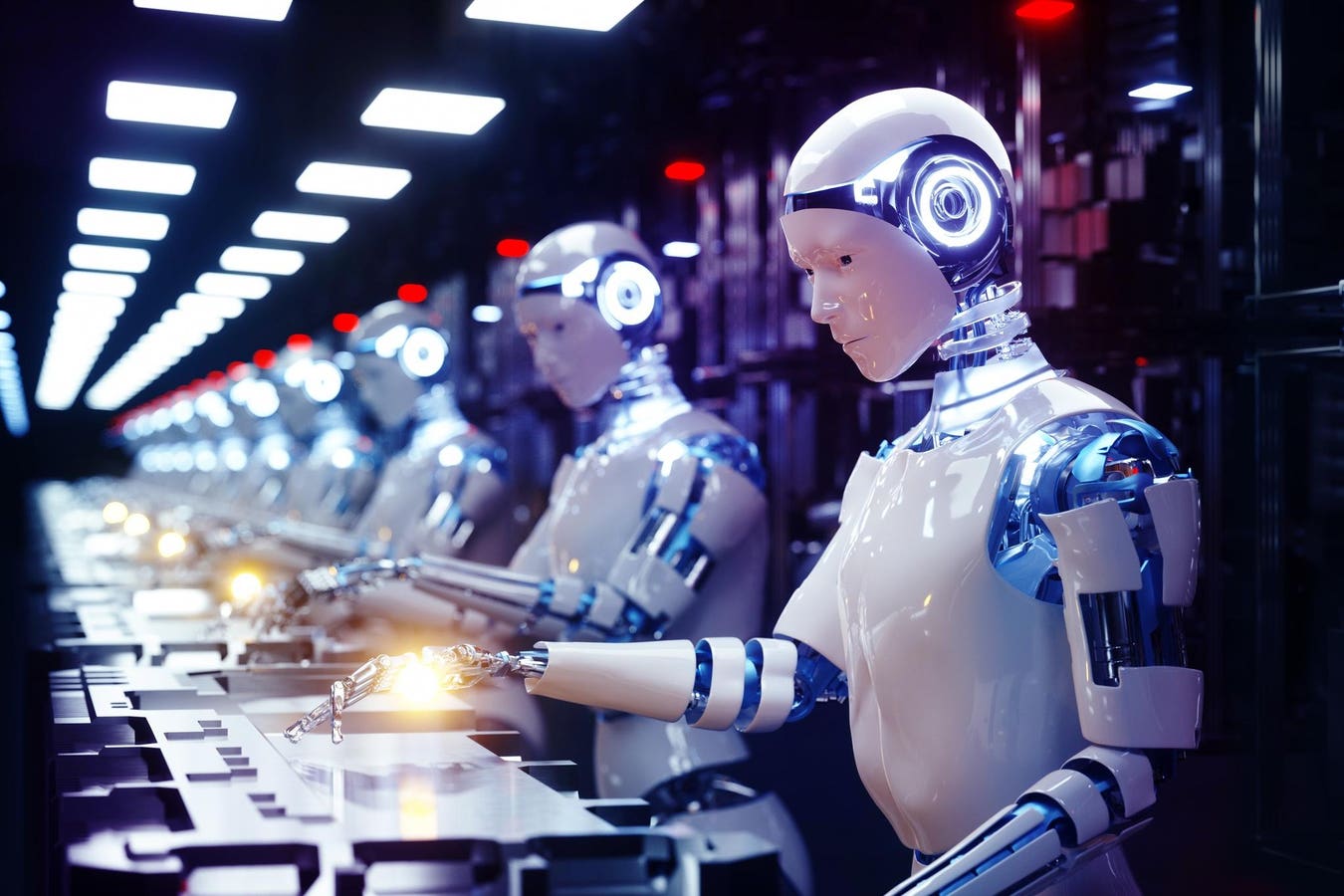
gettySince the advent of AI, it has been all about generating information. Large language models were used to write documents, generate software, summarize research, create images and answer questions. The next generation is something else entirely. Physical AI is something different. It has no safety net. It is AI connected to cameras, sensors or robotic arms or legs. These systems don’t just describe an action, as AI is used to; they perform it.
At its CES 2026 keynote, Nvidia signaled a potential turning point for robotics, unveiling new open AI models designed to help machines perceive, understand and act on the physical world. This is a huge leap in what the future of AI looks like because there is no “undo” button on a robotic arm that has already moved.
A new phase is emerging: physical AI, which is the turning point because it creates real consequences. It moves a real object in a real room, which leaves a trail of actions behind it. I think most companies are still caught up with agentic AI and building governance that barely covers generative AI at this point, when technology has already moved to its third phase. That’s where the real risk is.
From Outputs To Outcomes: The Technology That Makes This PossiblePhysical AI runs on the vision-language-action model, or VLA. This is a physical-world version of the language models most people already know. In a guide to VLA architecture, older robots followed pre-programmed rules, while VLA models are learning real behavior. With VLA, a robot can adapt to a new object or situation it wasn’t specifically trained on, understand a plain-language instruction and carry out a multistep task with very little human input along the way.
A traditional factory robot repeats the same motion thousands of times and falls apart when something on the line is out of place. A VLA-based robot is closer to a new hire who can read a set of instructions and figure out the details as it goes.
This isn’t a lab demo. What has changed most is that physical AI is now showing up in facilities that build and move real products for their customers. According to Logic Providers, “Platforms like NVIDIA Isaac and Omniverse let robots train themselves across millions of virtual scenarios before ever touching the real world.”
This means a manufacturer can build and test a robot in a digital workspace before spending anything on physical equipment. This is part of why deployment timelines that used to take years have been compressed to months.
Instead of failing and losing millions, this “simulate first” shift is why this technology feels real. Robots did not suddenly get smarter overnight. These companies can run multiple tests and fail many times in a simulation before any mistake with actual consequences happens in the real world.
Signals From The FieldAmazon is one of the most popular companies to mention when talking about physical AI. The company deployed over 1 million robots across its fulfillment network, coordinated by a generative AI model called DeepFleet that plans robot movement across the warehouse floor.
DeepFleet improved fleet travel time by 10%, and roughly 75% of Amazon’s global deliveries are now assisted by a robot. Separately, a warehouse automation analysis found Amazon’s robotics deployment delivering a 50% to 75% increase in items picked per hour. This is physical AI at a large scale.
Over a million machines deciding and moving in real time, inside working warehouses, not a pilot program in a lab. The 10% fleet efficiency gain also shows how much of the value isn’t the individual robot, it’s the AI layer deciding what all of them do together.
BMW Group’s Leipzig plant is the site of the automaker’s first European pilot project involving a humanoid robot. Developed by Hexagon Robotics, AEON began initial testing at the plant in December 2025, with plans to explore applications in high-voltage battery assembly and component manufacturing. By June 2026, the robot had begun performing production tasks as BMW and Hexagon continued evaluating its capabilities and integration into manufacturing operations.
My perspective on these case studies is that Amazon’s story is about scale and coordination: using an AI model to make a fleet of more than a million robots move more efficiently. BMW’s story is about extending robotics into additional manufacturing tasks, with a humanoid robot designed to handle material delivery and other work on the production floor.
Amazon illustrates how AI can improve coordination across a large, established robotic operation. BMW illustrates how manufacturers are exploring new ways to integrate adaptable robots into existing production workflows. Together, the examples show the range of physical AI applications emerging today, from coordinating large robotic fleets to bringing humanoid robots into workplaces alongside employees.
Leadership Blind Spot ChallengeThe biggest mistake I see leaders make when evaluating physical AI is that they do it the same way they’d evaluate a new piece of software. They focus on ROI and deployment speed, while treating safety and governance as something to deal with later.
That ordering is backward here. A chatbot that gives a wrong answer may lead to an awkward moment. A robot that misjudges a person’s position on a factory floor costs an injury to a real person.
The Opportunity And The ResponsibilityGenerative AI taught us to fact-check what a machine writes. Agentic AI is teaching us to double-check what a machine sends or approves. Physical AI is going to teach us how to trust what a machine does when it’s standing next to us.
That creates opportunities. Factories can become more flexible. Infrastructure can monitor itself. Robots can work in environments that previously had too many variables for conventional automation.
But the risks increase alongside the opportunity. Once AI controls machines, mistakes become physical. Security becomes physical. Reliability becomes physical. And the boundary between software engineering and systems engineering starts to disappear. AI is shaping the physical world around us, and that changes everything.
Forbes Technology Council is an invitation-only community for world-class CIOs, CTOs and technology executives. Do I qualify?


 1INCH
 0x Protocol
 3lon
 $1 is all you need
 1GUY