







Starlink Cutoff Disrupts Russian Artillery In Ukraine
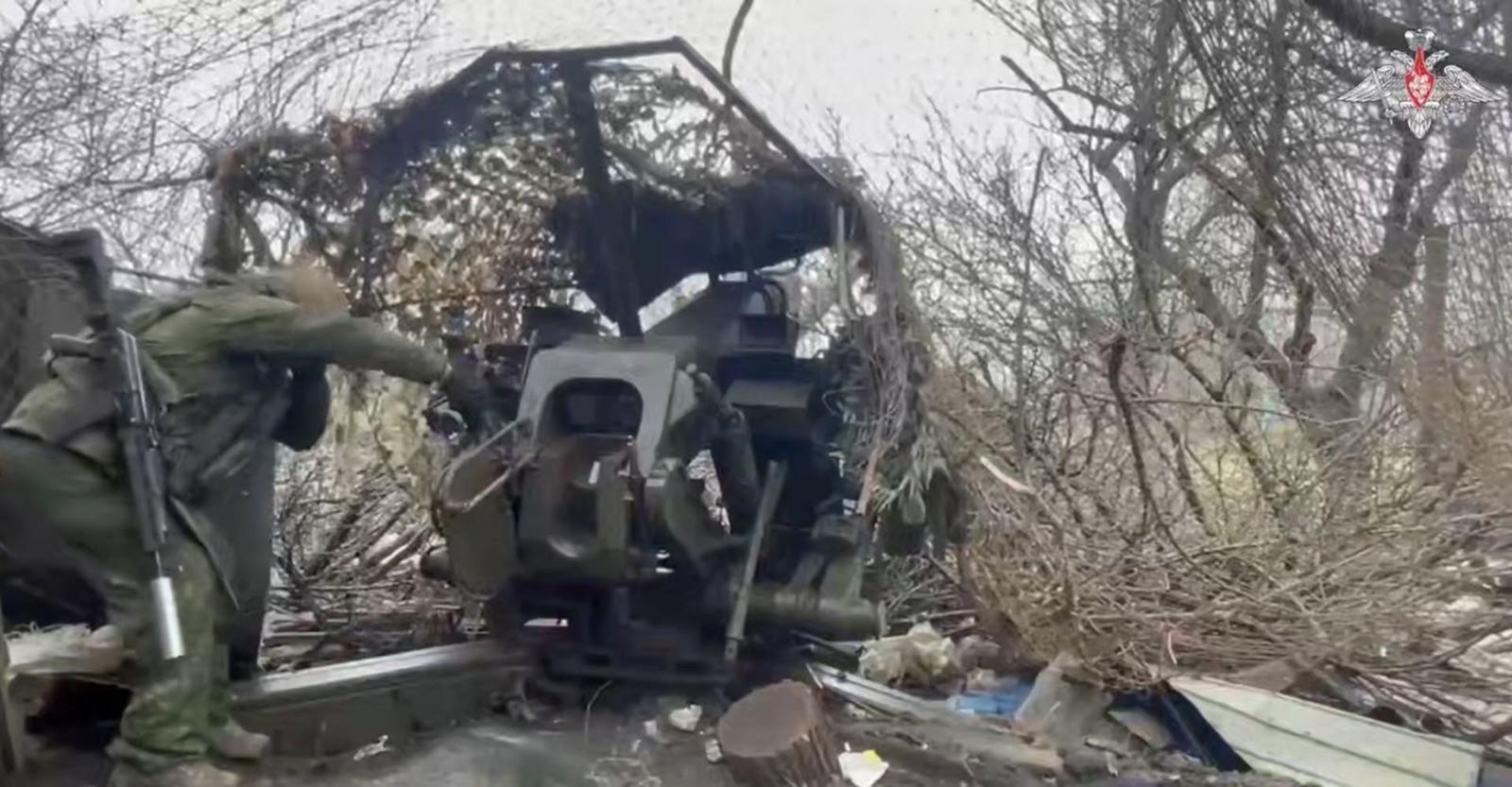
Image captured from video posted on Telegram by the Russian Ministry of Defense. The video shows a Russian D-30 howitzers shooting at Ukrainian positions in the Dnepropetrovsk direction. The video was posted on February 19, 2026.Social Media CaptureRussian military doctrine has historically centered on artillery, often called the “King of Battle” for the destructive power it brings to the battlefield. Although drones are playing an increasing role in the Russia–Ukraine War, artillery remains the backbone of Russian combat power, with forces expending more than 15,000 rounds per day. However, SpaceX’s recent decision to block Russian access to Starlink appears to have significantly impacted Russia’s ability to employ its artillery. Indeed, the resulting communication breakdown is reportedly creating confusion among units and reducing the effectiveness of the capability that has long been the anchor of Russian battlefield operations.
Effective Artillery Requires Reliable Communication NetworksModern artillery depends on reliable and resilient communication networks. At the tactical level, timely and secure links allow forward observers and drone operators to call for fire and adjust rounds once enemy forces are identified. Communications are also essential to synchronize maneuver units with fire support, enabling artillery to suppress or clear an area before infantry and armor advance. At the operational and strategic levels, resilient command networks are required to reposition artillery assets, integrate intelligence feeds, identify targets, and incorporate fires into the broader campaign plan. In Russia’s centralized, top-down command system, this dependence is even greater. Higher headquarters must issue guidance while receiving timely battlefield data from frontline units to inform decisions.
The loss of Starlink has significantly affected Russian strategic communications. Without this reliable network, the flow of information to and from higher headquarters has been disrupted, leading senior leaders to issue orders without a clear understanding of conditions on the ground. In response, the Russian military has publicly maintained that its communications remain intact, focusing primarily on tactical networks. While those systems may not have been directly affected by the Starlink disruption, Ukraine appears to be systematically targeting Russian tactical communication terminals with drone strikes, further degrading this capability.
Image capture from a video posted on Telegram by the Russian Ministry of Defense showing Russian forces firing artillery at Ukrainian positions along the Dnipro River. The video was posted on February 18, 2026.Social Media CaptureThe effects of degraded communications are reflected in a recent social media post from a Russian artilleryman describing a growing disconnect between higher headquarters and frontline units. He recounts receiving an order to move his D-30 battery forward because it was not meeting a prescribed “average distance” from the front line, although its current position allowed it to support ongoing missions effectively. When the unit scouted new positions, it found no viable firing locations, as Ukrainian forces were already occupying much of the area. The directive appeared to have been driven by abstract metrics rather than battlefield realities. Such problems are consistent with the reduced visibility at higher headquarters that followed the Starlink disruption.
MORE FOR YOUThe Importance Of Artillery To Russian OperationsOver the past months, Russian forces have continued to rely heavily on artillery to support ground operations across the eastern and southern fronts. They have used sustained indirect fire to degrade defensive lines and enable incremental advances throughout the Donetsk and Zaporizhzhia sectors. Massed fires have also set the conditions for assaults, reflecting a doctrine that prioritizes firepower over rapid maneuver.
This reliance is visible in strike patterns observed along the front. A recent analysis circulated on X used satellite imagery of snowfall during the first week of February, before Russian forces reportedly lost access to Starlink, to identify artillery impacts preserved in the snow. Although the dataset does not capture every strike, it documented roughly 12,000 recent impact points. The distribution of strikes highlights several priority sectors. Near Hulialpole, Russian forces are using artillery to contest the gray zone, supporting their assault forces as they try to secure key terrain in it. Around Stepnohirsk, artillery is targeting Ukrainian infantry and vehicles in support of efforts to push north toward the Dnipro River. A particularly dense cluster of strikes between Dobropillia and Pokrovsk suggests preparations for a larger assault aimed at degrading Ukrainian fortifications. As seen in that analysis, artillery has been central to shaping Russian offensive operations across multiple axes.
Images captured from a video posted on Telegram by the Russian Ministry of Defense. The video shows a Grad MLRS engaging targets in the Dnepropetrovsk region (inset image). It included drone footage recording the hits which are visible in the snow (main image). The video was posted on February 17, 2026.Social Media CaptureIndeed, artillery offers advantages that drones alone cannot replicate, particularly in volume, endurance, and destructive power. Tube and rocket systems can sustain massed fires over wide areas, suppress defenses, and destroy fortified positions in ways that single strike drones cannot match. Drones provide precision and reconnaissance but lack the payload and rate of fire required for large-scale suppression. Rather than replacing artillery, drones complement it, with each system fulfilling distinct but mutually reinforcing roles.
The Reduced Presence of Russian Artillery on the BattlefieldReports from the front lines are mixed, making it difficult to form a complete picture of battlefield momentum. However, there is growing evidence that Ukrainian forces are pushing back in key sectors. Analysis from the Institute for the Study of War found that Ukrainian units recaptured roughly 201 square kilometers of ground between February 11 and 15, primarily east of Zaporizhzhia, marking the fastest territorial gains in over two and a half years. At the same time, heavy positional fighting continues across much of the front, with Russian pressure persisting around Donetsk and other areas.
Despite ongoing combat, including a significant push by Ukrainian units, reports from the Armed Forces of Ukraine indicate a significant reduction in the number of Russian artillery platforms destroyed since Russia lost access to Starlink. This trend is reflected in data compiled by Oryxspioenkop, which catalogs open-source imagery of destroyed military equipment. The site documents only nine Russian artillery losses in the first few weeks of February, compared to approximately 2,100 documented losses over the course of the conflict.
Screen capture from video posted on Telegram by the Russian Ministry of Defense showing an Akatsiya self-propelled howitzer moving to a different position in the Zaporozhye region. The video was posted on February 23, 2025.Social Media CaptureGiven the continued intensity of fighting, this decline is notable and likely reflects a reduced tempo of Russian fire missions. Artillery units are most vulnerable when firing, as each salvo increases the risk of detection by drones and counterbattery systems. If Russian howitzers are firing less frequently due to coordination challenges, they may reduce their exposure and suffer fewer immediate losses, even as their overall effectiveness declines.
Because artillery sits at the center of Russian doctrine, any disruption to its effectiveness carries significant battlefield consequences. This creates an opportunity for Ukraine to regain ground while Russian artillery operations remain constrained. At the same time, the centrality of artillery to Russian military practice suggests that Moscow will seek procedural or technical workarounds to restore the effectiveness of its fires. The outcome will depend on whether Russia can reestablish reliable communications before Ukraine capitalizes on this temporary imbalance.

 Bitcoin
  Ethereum
  Tether
  XRP
XRP  BNB
BNB  USDC
USDC  Solana
  TRON
TRON  Figure Heloc
  Lido Staked Ether