





Tim Draper’s Elon Musk Playbook: SpaceX, Tesla and The $2 Trillion IPO
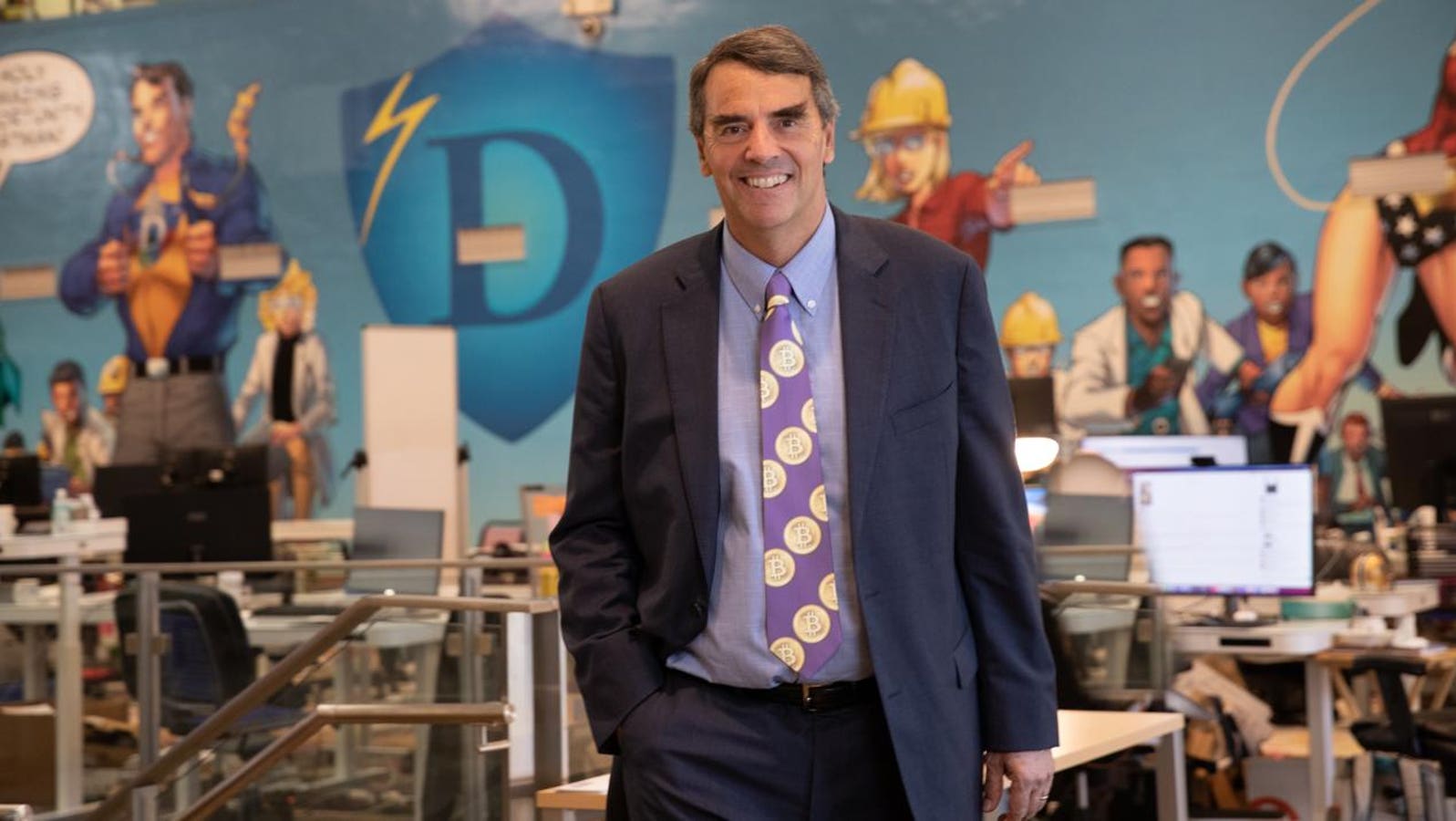
What did Tim Draper see in Elon Musk that others missed? The early Tesla and SpaceX backer on the $2 trillion IPO, xAI, and the coming AI shakeout.Draper AssociatesSpaceX’s blockbuster IPO this year created billions in paper wealth. Shares climbed 19% after Wall Street’s biggest-ever debut, valuing the company at more than $2 trillion. Silicon Valley has spent the months since explaining why the outcome was inevitable. American venture capital investor Tim Draper, however, remembers a different version, one that starts with his firm writing one of the earliest checks into the company, and watching it burn.
“We were the first investor after Elon, who put 30 million of his own money in. The first two rockets after we invested blew up on the launch pad,” Draper tells me in an exclusive conversation. “Then there was a successful launch and customers lined up. He could launch a rocket for one two-hundredth of the cost that NASA was launching rockets, and boy, he found a lot of interesting, good customers.”
That gap between the smoking launch pad and the celebrated IPO is where Draper says the entire venture business actually lives: the stretch where conviction has no evidence behind it, the losses arrive before the proof does, and most investors refuse to go. Big venture returns, he argues, demand a willingness to back the uncertain.
The third-generation venture capitalist and founder of Draper Associates and Draper Fisher Jurvetson has backed Elon Musk’s ventures across two decades and two industries. Draper Fisher Jurvetson invested in Tesla’s 2006 Series C, Draper Associates followed in the 2007 Series D, and Draper’s firms were later among SpaceX’s earliest outside investors, bets that have paid off handsomely. Along the way, Draper also made early investments in Hotmail, Skype, Baidu and Robinhood.
Having watched the AI and space technology booms unfold, Draper sees too many investors chasing consensus. His own philosophy has been the opposite: backing ideas the market initially dismissed.
MORE FOR YOUWhen people ask how he knew SpaceX would succeed, he says he never did. Instead, he looks for a credible path to where founders want to go, asks whether the business could become even bigger than they imagine, and whether it would create a future, or in SpaceX’s case a universe, he wants to live in.
“For every SpaceX, there’s a graveyard of companies that tried things that were big and extraordinary,” he says. “But if you don’t try things that are big and extraordinary, you are not going to get there. That’s where our education system has failed a lot of us: the A means you didn’t make a mistake, and there’s no grade for the extraordinary.”
He knows the graveyard personally: Draper was among the first investors in Theranos, and he has said he expects roughly 60% of his bets to lose money.
The DIY Electric Car That Led to Tesla InvestmentDraper’s journey to Tesla actually began before Elon Musk ran the company. In fact, his relationship with Musk predates Tesla itself. Draper says his firm circled Musk’s orbit back in the X.com days, making an offer to Confinity, the startup Musk’s company merged with before the combined entity became PayPal. A corporate venture firm outbid his firm, but the connection stuck. So when Tesla surfaced years later, Musk wasn’t a stranger.
“I fell in love with electric cars after a guy named Ian Wright came to our office and strapped me into this homemade car built with PVC pipes,” Draper recalled. “He hit the accelerator, and we took off. We were doing more than 60 miles an hour and stopped almost instantly. That’s when I realized people would want electric cars. They weren’t just for golfers or environmentalists.”
Curious, Draper started meeting people building electric vehicles and kept hearing one name: Tesla. His firm invested in founder Martin Eberhard, impressed by Tesla’s battery technology, which could isolate failing cells rather than letting one bad cell disable the entire pack. When Tesla later ran short of cash, Musk, by then the company’s chairman and largest shareholder, offered to invest $10 million on the condition that he take over as CEO.
According to Draper, the firm’s history with Musk made the decision easy: they knew his capacity, and the company needed both his money and his force. “We knew Elon, and we said, that is a win-win,” Draper says. “We’ll take the ten million dollars and you run the company.” He credits what followed to Musk’s ability to execute: securing a $465 million loan from the Department of Energy, buying the former NUMMI factory for a fraction of its value, and transforming Tesla into a real car company in remarkably little time.
Draper’s xAI Optimism and Why He Quit Investing in ChinaDraper’s AI preference is also contrarian even by his standards: Musk’s xAI, for philosophical reasons. He recalls telling Sam Altman that ChatGPT-3 had been great but ChatGPT-4 felt like a product run by lawyers, engineered to make him feel better rather than give him the facts. Altman’s response, in Draper’s telling, was that OpenAI was considering a slider to adjust for exactly that. Draper offered his own label for the dial: “a slider from woke to truth.”
“The one I want to work with is going to be the one who doesn’t necessarily make me feel good, but gives it to me straight. For me, Grok, xAI — they’re my first choice,” Draper says.
But xAI’s models have trailed Anthropic, OpenAI and Google, and its enterprise adoption lags, a gap I pressed him on. Draper didn’t budge. Claude, he acknowledged, assimilates corporate data into its models well, but for raw data, xAI holds all of Twitter, and he hasn’t hit its limits. Pressed further on whether truth alone is a moat, his answer got shorter: “Isn’t that enough? If I’m doing a search, I want the truth.”
He admitted xAI was late to the game and trails in market share, but believes it is steadily growing. “I don’t always pick the one everybody else has picked,” he says.
His contrarianism extends to geography. Draper claimed he was the first Silicon Valley venture investor to invest in China, and the first to stop, once Xi Jinping reverted, in his telling, to a socialist platform of controlling everybody and everything. He shared that his portfolio companies in China began getting fined for things they hadn’t done and were hit with regulations that didn’t exist. He pulled out, recognizing the shift as socialism: a system where the leader decides what everybody else does and government becomes the thing that matters.
His deeper objection is that such control kills freedom of thought, and with it the ability to innovate. Founders who can’t think freely because the government is watching, he argues, lose the room to experiment, to chase ideas that might not be politically correct but might change the whole world.
“President Xi is a weak man. The great, strongest leaders set clear guidelines, and then they trust their people and set them free,” Draper says. “Fortunately, we still have that in the US. It’s probably the best place to start a business.” China’s loss, in his view, is a function of the free thought America still permits. “If I’m a Chinese person and I’m an entrepreneur, I move to the US or I move to Singapore,” Draper says.
The Next Amazon Will Be Born After the AI CrashAsk Draper where AI lands a decade from now, and he reaches for a pattern he’s watched play out before, one he calls the “iS curve.” A new technology gets hyped, the hype collapses, and then, long after the disappointment, the technology grows into something far bigger than even the peak of the frenzy predicted.
The dot-com era is his proof. The companies everyone bet on going into the internet bubble were AOL and Netscape. The crash wiped that story out, and the real giants, Amazon, Facebook, Google and Apple, rose from the wreckage afterward. He expects AI to follow the same script: no crash in the short term, by his read, but many of the biggest winners will be companies that emerge on the other side of one.
Draper has been candid that his missed investments, including Netflix, LinkedIn and Google, taught him more than many wins. When I ask what remains timeless, he puts honesty and integrity first. Build a circle of trust inside your company, with your customers, and with your suppliers, Draper says, and that trust compounds over time. In his experience, the greatest entrepreneurs are almost always deeply trustworthy. Otherwise, they wouldn’t have gotten where they are.
Draper’s advice to aspiring founders is to avoid the crowded middle of the AI boom. If hundreds of companies are already pursuing the same idea, he says, it’s probably too obvious. Instead, he urges entrepreneurs to chase the ideas that aren’t immediately apparent. “Instead of thinking about what’s in the front of your brain, think about what’s in the back,” he says. “Think, ‘What if?’ instead of, ‘Wow, look, there’s an opportunity.'”
He’s still refusing to pick the one everybody else has picked.

 1INCH
1INCH  0x Protocol
  3lon
3lon  $1 is all you need
  1GUY
1GUY