







Anker’s Compact SOLIX S2000 Cuts Standby Power Drain
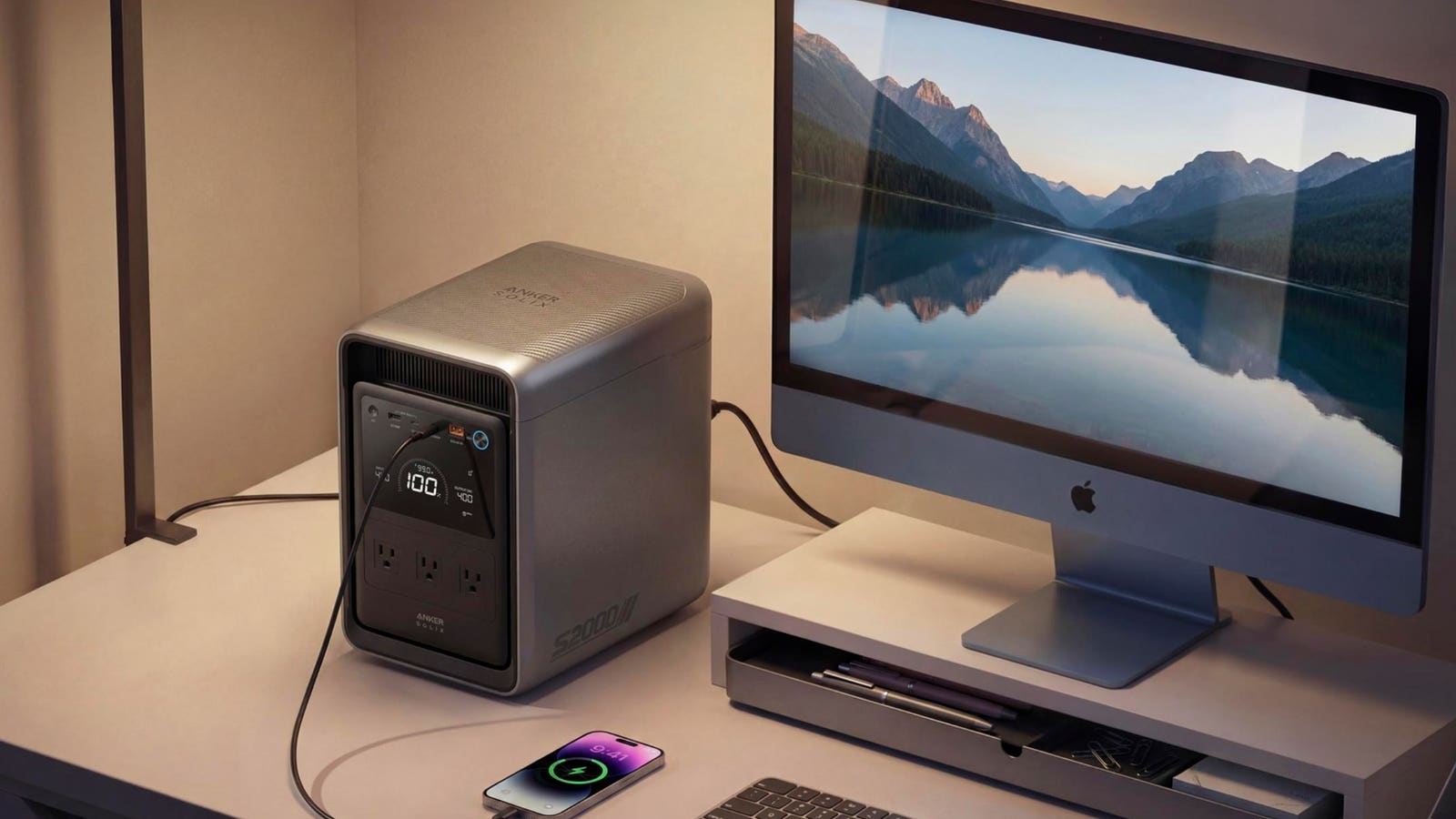
The new Anker SOLIXS2000AnkerThe Anker SOLIX S2000 has just been announced, the first device in the Chinese company’s new S-Series, designed specifically for your home backup rather than camping setups or remote power.
The S2000 is designed to solve a couple of long-standing frustrations with this seemingly never-ending growing area of tech, specifically batteries that drain when not in use and devices that are just too bulky for modern home use.
Anker says the S2000 runs at around 6W when AC output is left on, which is significantly lower than competing systems from brands like EcoFlow, Bluetti, and Jackery that can sit closer to 20W or higher.
That difference sounds minor until you leave a unit sitting for days, where standby loss can start to meaningfully eat into stored energy.
Anker is using its OptiSave system to reduce wasted overhead when the unit is not actively powering devices. The brand also claims the S2000 can deliver up to 35 hours of refrigerator backup from its 2,010Wh capacity, depending on load and conditions.
The slight trade-off is that the S2000 uses a 1,500W inverter with a 3,000W surge rating rather than the higher output systems found in many rivals. That puts it below some competing 2kWh units on peak power, but still within range for most household essentials including fridges, routers, kettles, coffee machines, and smaller cooking appliances.
Short bursts of higher draw devices are also supported within the surge limit.
At 208 x 282 x 323 mm, Anker claims the S2000 delivers around 106Wh per liter, giving it a smaller footprint than many similar capacity units.
MORE FOR YOUThat compact design isn’t just about shelf space, with rear-facing AC outlets allowing the unit to sit flush against a wall, which is handy if you want to place it behind a fridge or in a tight utility corner and the front ports are also easy to access without shifting the device around.
The port setup includes dual 100W USB-C outputs, a USB-A port, five AC outlets (split between front and rear), and a 400W solar input for off-grid charging.
Anker says AC charging can take the battery to 80% in around 1.2 hours, with solar topping it up over a typical day of sunlight depending on conditions.
The S2000 uses LiFePO4 cells rated for up to 10,000 cycles, which should mean long-term use over many years under normal household cycling.
It also includes UPS functionality for near-instant switchover during outages, aimed at keeping essentials like refrigeration and connectivity running without interruption.
It’s available to order now, with early access sign-ups running until June 1, with a subscriber code bringing the S2000 down to $599 for the official launch on June 2.
A preorder window also offers $579 pricing, before it climbs to an MSRP of $1,199.99.
At that level, the S2000 is positioned to undercut a number of established 2kWh systems while pushing harder on real-world runtime and physical footprint rather than headline capacity alone.


 1INCH
1INCH  0x Protocol
  3lon
3lon  $1 is all you need
  1GUY
1GUY